
Most website translation tools treat the problem like a content export job. You pull your text, hand it to someone — a tool, an agency, a freelancer, and wait. Then you re-import, check for broken layouts, fix issues, and repeat each time you update a page. It is slow, expensive, and structurally fragile.
WebTrans AI is built on a different premise entirely. It treats website translation as a continuous data pipeline — automated at the extraction and translation stages, with structured human oversight exactly where quality matters most, and deployed without touching a single line of your existing code. Understanding how each layer of that pipeline works is what this blog is about.
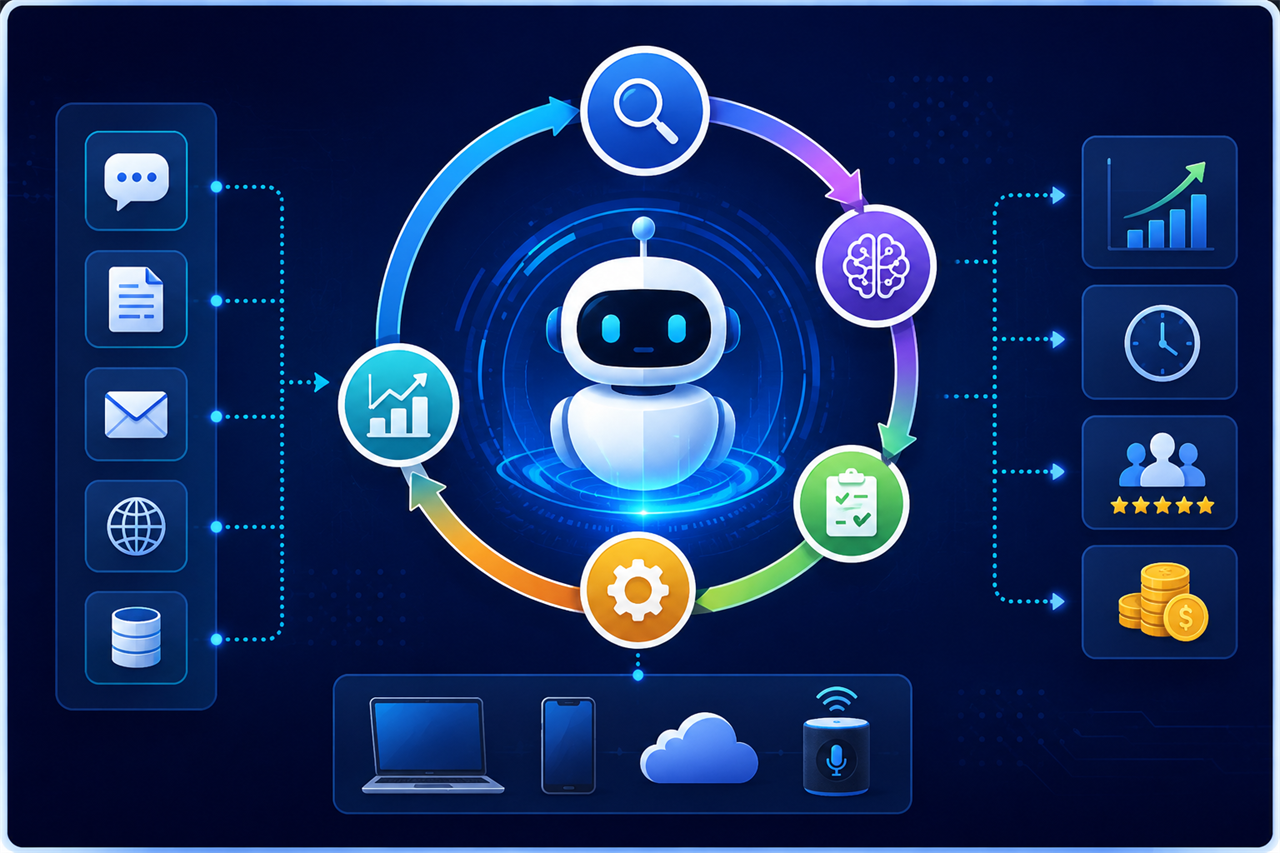
The platform operates across four distinct stages: content discovery via an intelligent crawler, AI-powered translation with MT provider flexibility and Translation Memory, a structured human review workflow with segment-level quality gates, and non-invasive delivery via a JavaScript snippet. Each stage has a specific job. Each stage feeds clean output to the next.
Together, they form a scalable website translation platform designed for modern multilingual websites.
The foundation of any website translation pipeline is content extraction. Get this wrong, and every downstream stage suffers. Most tools get this wrong because they either pull content from source files — picking up code, template tags and JSON keys alongside actual copy — or they rely on manual exports that are immediately out of date.
WebTrans AI uses a DOM-aware crawler that reads your live website as a browser would. It visits each page, renders the DOM, and extracts only the text nodes a human visitor would actually see and read. That means headings, paragraphs, navigation labels, button text, form placeholders, image alt attributes — the visible content layer. Everything outside that boundary is explicitly ignored.
The practical significance of this is larger than it sounds. Here is what the crawler skips by design:
This DOM-aware extraction boundary keeps your Translation Memory clean. A clean TM is the foundation of cost efficiency and consistency across your site and it starts at the crawl layer. Beyond content quality, the crawler is also stack-agnostic. Because it reads the rendered page rather than your CMS database or application source, it works identically on WordPress, headless CMS platforms like Contentful or Sanity, static HTML sites, Next.js and React applications, and any custom backend stack. No integration, plugin installation, or backend API access is required.
Once the crawler produces a clean segment inventory, the translation engine takes over. This is where WebTrans AI's architecture diverges most sharply from simpler MT tools—and where the platform's long-term value accumulates.
WebTrans AI does not commit to a single machine translation engine. Instead, it operates as an abstraction layer that connects to leading MT providers— such as Google Neural Machine Translation and DeepL—and routes each translation job to the engine that performs best for that specific language pair and content domain.
This matters because no single engine is best for all languages. DeepL consistently produces more natural output for European language pairs such as English to German, French, and Polish, particularly for nuanced professional and marketing content. Google NMT covers a broader range of scripts and performs better for Indic languages, Southeast Asian language pairs, and low-resource languages. A platform that forces one engine on every job optimises for simplicity at the cost of quality. WebTrans AI intelligently routes to ensure you get the best available translation for every language you support.
Every segment your team approves is stored in the Translation Memory as a source-target pair, keyed by language pair and content domain. On every subsequent crawl, new and updated content is matched against the TM before anything goes near an MT engine. The matching logic works across three tiers:
The compounding effect here is significant. The longer you use the platform, the higher your average TM match rate. The higher your match rate, the lower your per-word MT spend. The more reuse from approved segments, the more consistent your brand language across every page and every update cycle. Translation Memory is simultaneously a cost-control mechanism and a quality-consistency mechanism, and it starts delivering value from the second approved translation onward.
Product names, brand terminology, feature labels and legal phrases are locked in a platform-level glossary. The MT engine is instructed never to translate glossary entries or always to translate them using a pre-approved equivalent. This is implemented either as term injection into the MT API request, which is supported natively by both Google and DeepL at the API level, or as a post-processing substitution pass. Either way, your brand language is never at the mercy of a machine's guess.
This layer makes WebTrans AI a platform rather than a plugin. Plugins translate and publish. WebTrans AI translates and gates. No translation reaches a live visitor without clearing a defined review lifecycle. That is not a setting; it is how the system is architected.
Every extracted string moves through a four-state lifecycle: MT, the raw machine translation output. Translated, a human editor has modified the segment. Reviewed: a linguist or senior reviewer has verified it. Approved, cleared for live delivery. Only approved segments are served to visitors. This structure prevents any batch MT job from going live silently and prevents the most common quality failure in translation workflows: approving a page without reading each segment.
The reviewer console is built around operational reality; not all pages on your website carry equal business weight. Your homepage and pricing page drive conversion. A blog post from three years ago does not. The console reflects this through practical workflow tools:
The audit trail is particularly important for enterprises in regulated industries. Finance, healthcare, and legal content have compliance requirements around translation accuracy that a segment-level log directly satisfies.
WebTrans AI supports two reviewer models. Your internal team — bilingual marketing staff, in-house translators, or regional content managers can use the console directly as part of their normal workflow. Alternatively, CHL Softech's certified professional linguists handle review as a fully managed add-on service, billed per word per language with volume discounts. Many clients run a hybrid approach: a managed professional review for Tier 1 pages, homepage, pricing, and product, and an in-house or AI-only review for everything else.
Once translations are approved in the review console, they are ready for live delivery. The deployment mechanism is a small JavaScript snippet added to the head tag of your site. That is the only change required for your existing website. No pages rebuilt. No URLs restructured. No CMS migrated. No deployment pipeline modified.
The snippet reads the visitor's selected locale — stored in a browser cookie or user preference — and replaces the source-language DOM text nodes with the corresponding approved translations for that locale. The swap happens client-side in the browser after the original HTML renders. Your server is sending the same HTML it has always sent. Your URLs do not change. Your CMS, CDN, and hosting infrastructure are completely unaffected.
For performance, approved translations are cached in the CDN or at the edge layer. The snippet does not make a live translation API call on every page load. Returning visitors receive their language from cache — fast, with no latency from translation lookups. This also means that the translation delivery adds no meaningful overhead to your site's performance.
The snippet is stack-agnostic by design. It works on:
• Static HTML websites — no build tools or frameworks required
• WordPress — with any theme, any page builder, no plugin needed
• Headless CMS implementations — Contentful, Sanity, Strapi, or any headless setup
• React and Next.js applications — client-side rendering handled natively
• Custom backend applications — PHP, Rails, Django, Node — language of your stack is irrelevant
For enterprises with data residency requirements or strict internal security policies, WebTrans AI can be fully hosted on your own infrastructure — your own PostgreSQL instance, your own storage layer. All translation data, TM content, glossaries, and segment history remain on your servers, aligned with your existing security policies. SSO integration, audit logs, and security reviews are included at the Enterprise tier.
For businesses in regulated industries — finance, healthcare, legal, pharmaceuticals — where data lives is a compliance requirement, not a preference. WebTrans AI can be fully self-hosted on your own infrastructure: your own servers, your own PostgreSQL database, your own storage layer. All Translation Memory, glossaries, and segment audit history stay in your environment, governed by your own security policies.
Enterprise tier adds SSO integration, full audit logging, and security review support for formal vendor assessment processes. Every translation decision made on the platform is logged at the segment level—by whom, when, and what changed. That audit trail satisfies content-accuracy documentation requirements in regulated industries without additional workflow overhead.
WebTrans AI is designed to serve every stakeholder in a typical localization decision — not just the developer who implements it.
One JS script tag is the full implementation footprint. There is no CMS integration, no new deployment pipeline, no duplicate URL architecture to maintain, and no tech debt created. The platform sits entirely outside your application layer. You can implement it in an afternoon without creating an ongoing maintenance burden.
The reviewer console is yours to operate independently of the engineering team. Filter by page, edit inline, approve in bulk. When you update a page in English, the updated segments surface automatically in the console at MT status — ready for your review cycle. You are not waiting for a developer to export files or push a build.
The platform is self-hostable on your own PostgreSQL-based infrastructure. SSO-ready. Segment-level audit trail. Your translation data is a structured, queryable dataset you own — not locked in a third-party SaaS black box. Enterprise tier adds dedicated infrastructure, custom QA workflows, and a dedicated linguist team for organisations with complex compliance requirements.
A structured segment-level workflow replaces ad-hoc email-based file handoffs. Parallel review by language means you do not wait for all languages before going live. Volume discounts on human review make the managed service model economically viable at scale.
The through-line of this blog has been a single, important reframe. Website translation is not a project with a start date and an end date. It is a living system — one that needs to keep up with every content update you ship, in every language you support, without creating engineering overhead or brand risk every time you hit publish.
WebTrans AI is built on that premise. A smart crawler that extracts only what should be translated. An MT engine layer that routes to the best provider per language pair and builds compounding value through Translation Memory. A reviewer console that enforces quality structurally through a segment-level state machine, not through manual checklists. A delivery layer that works on any stack through a single JavaScript snippet, with no changes to your infrastructure.
Each feature addresses a specific failure point in how translation has historically been done. Together, they form a localization pipeline — not a translation tool. That is the distinction worth understanding. And it is why teams that implement WebTrans AI stop treating multilingual support as a separate workstream and start treating it as part of how their website operates.
We are here to assist with your questions. Write us a message, and we will get back to you shortly.

.png)