The proliferation of SaaS is propelling the IT sector to unprecedented heights today.
Every business starts somewhere with software. As the business grows, the nature and complexities of work changes and so does the subscription costs to accommodate more users, servers and features.
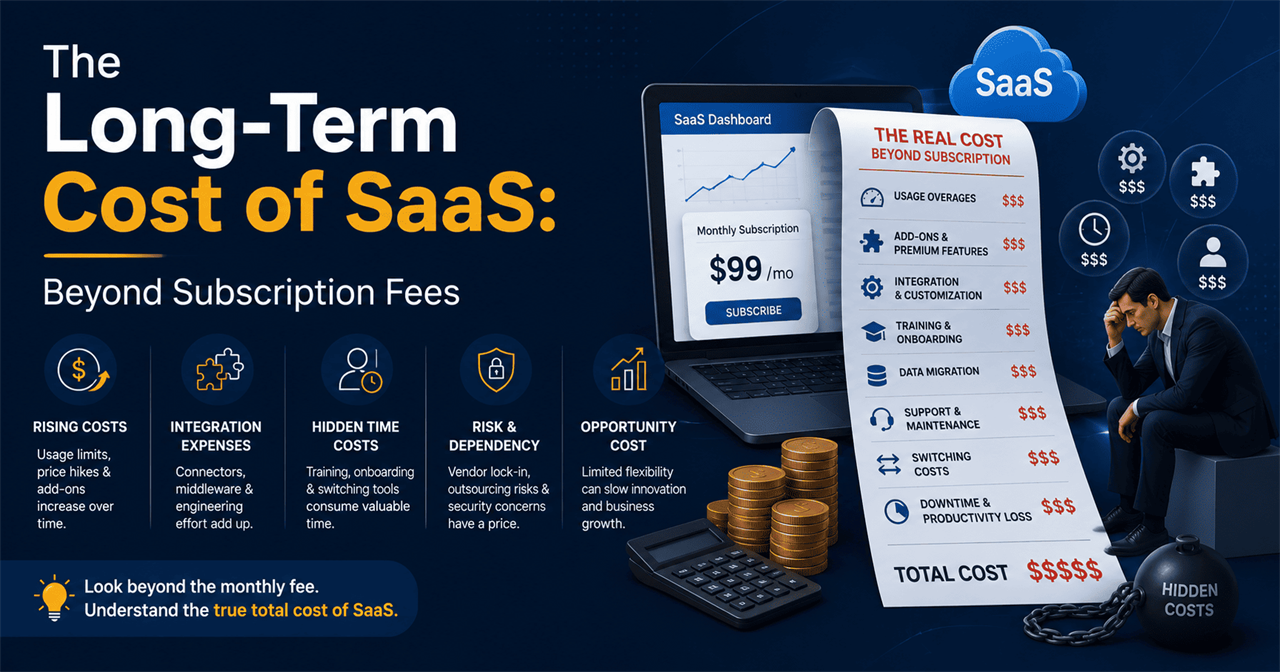
A CRM here. An HRMS there. A project management tool, a reporting layer, maybe some middleware to connect them all. Each subscription made sense when it was added. Together, they quietly become one of the largest recurring expenses on the books.
That is the hidden cost of SaaS. Not the monthly invoice. The compounding over time.
What the Per User Model Actually Costs
SaaS pricing is designed to grow with you, and that is exactly the problem.
Bring on 20 more employees and you are paying for 20 more seats across every tool you run. Need advanced reporting? That sits behind a higher tier. Tighter integrations between tools? There is middleware for that, and it carries its own subscription.
By the time a mid-size company does a full audit of its software spend, the number is often a surprise. Not because any single tool is expensive, but because the stack has grown without anyone consciously approving it.
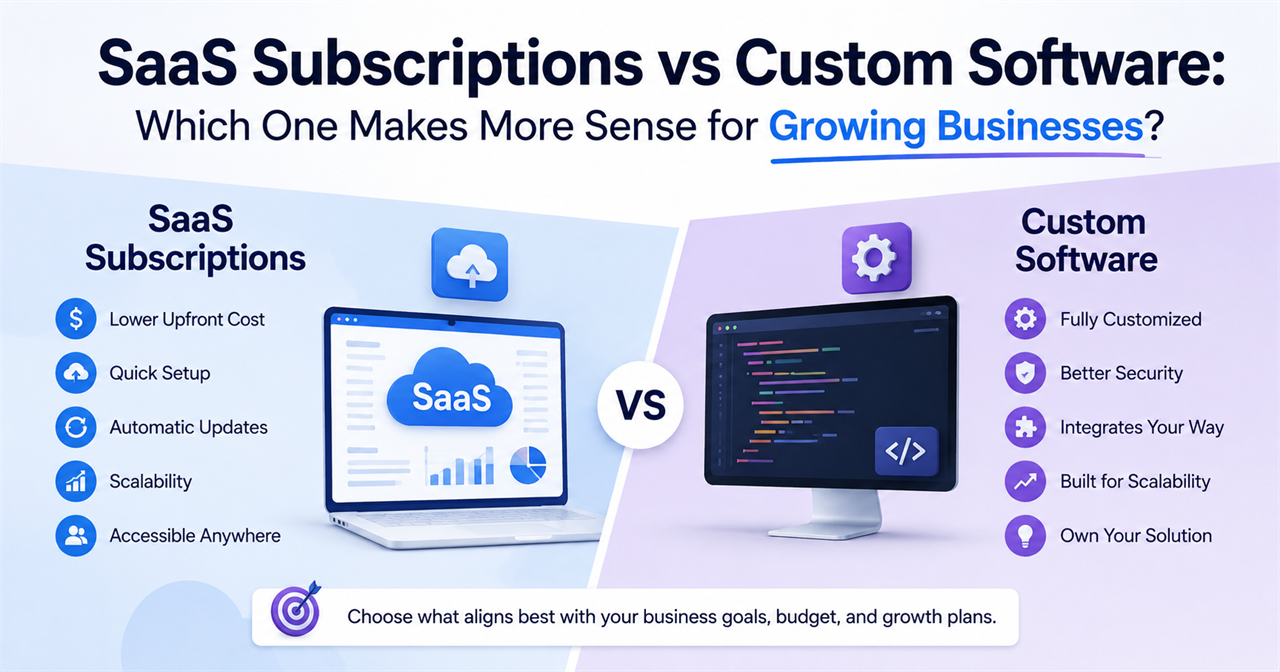
At a certain scale, annual subscription costs exceed what it would take to build a solution that does everything the business needs and owns it outright.
The Ownership Gap Nobody Prices In
Renting software means the vendor owns the code, controls the roadmap, and sets the pricing. If costs increase or a feature gets discontinued, the options are limited in either absorbing the increase or go through the disruption of migrating elsewhere.
This dependency is real. Companies running five or six rented tools are not just spending more. They are building their entire operational infrastructure on ground they do not control.
That risk compounds the longer it goes unaddressed.
Where Custom Software Changes the Math
A custom-built solution like ours flips the equation entirely.
Instead of the business bending itself around a generic product, the software is shaped around how the organization works. Approval chains, reporting structure, operational logic, all of it becomes the foundation rather than an afterthought.
No workarounds. No retrofitting. No paying for unused features while the ones you need sit behind an enterprise upgrade.
We at CHL Softech build custom operational solutions for businesses that have outgrown their SaaS stacks. The process automation and custom platform development work covers ERP workflows, HRMS, CRM, inventory systems, finance modules, and internal workflow automation — all consolidated into one owned system, hosted on your infrastructure, with full codebase ownership handed over to your team.
One investment. Complete ownership. No recurring licensing burden as the headcount grows.
Who This Conversation Is Actually For
Early-stage teams still moving fast should start with SaaS. The speed and accessibility make sense at that stage.
This is a different conversation for operationally complex organizations managing specialized workflows that packaged software was never built to handle. Manufacturing companies, logistics providers, staffing firms, healthcare operations, and service businesses across Delhi, Noida, and Bengaluru are increasingly asking whether their subscription stack is still the smartest investment, or just the most familiar one.
For these organizations, the question is not whether custom software is worth evaluating. It is whether the ongoing cost of rented tools is justifiable against what full ownership would deliver over three to five years.
Softech's custom software development practice is built for exactly this transition helping businesses move from a fragmented, vendor dependent stack to a centralized system they own and control entirely.
The Bottom Line
SaaS costs what it costs today, and more tomorrow. Custom software costs once, then saves for years.
The organizations pulling ahead have stopped using more software. They are using custom software built around how they operate and adapting to today’s dynamic tech environment.
We are here to assist with your questions. Write us a message, and we will get back to you shortly.

.png)