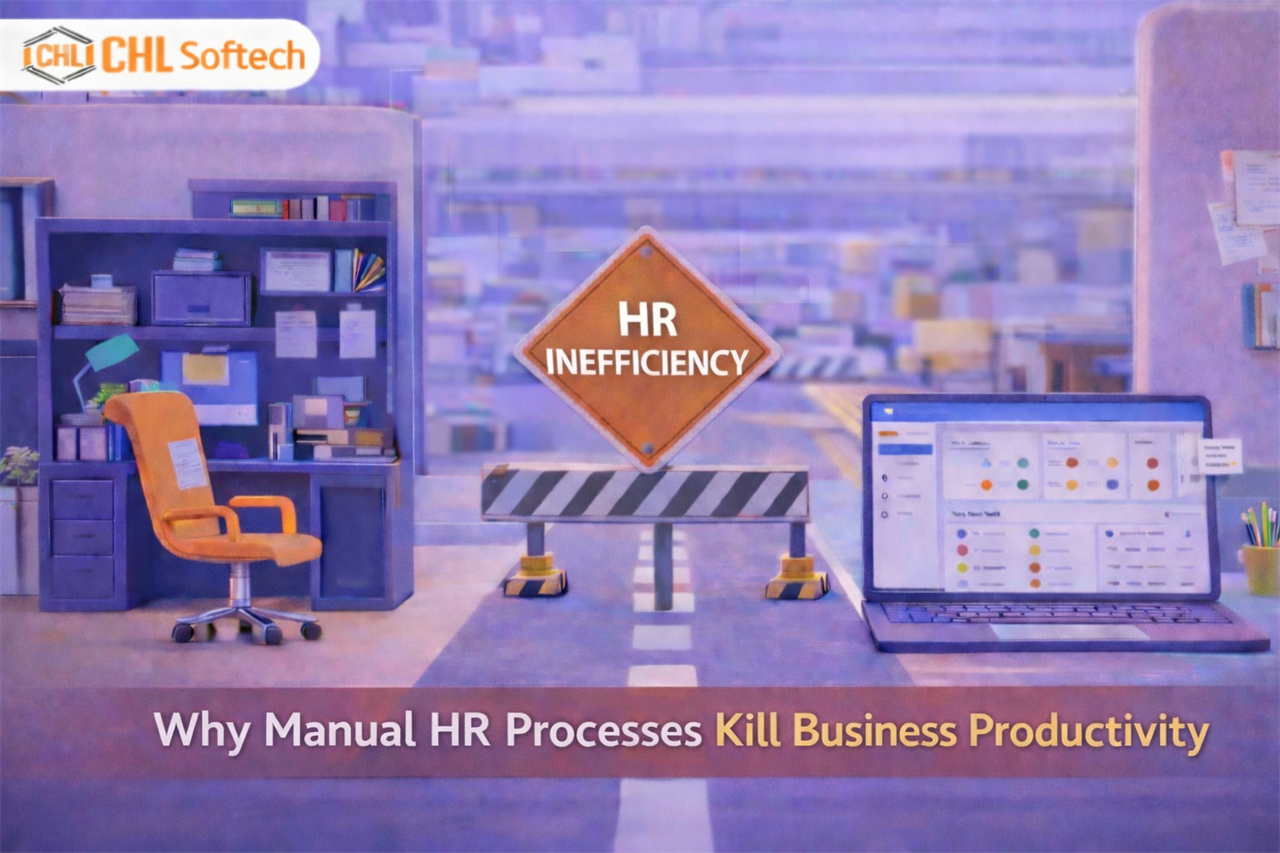
As productivity suffers, many managers attribute this decrease to distractions, a reduced ability to focus, and the challenges of working from home. As a result, many managers appear to ignore the real breakdown within their organisations, which is often far closer to their workplace than they think. Systems and processes that are outdated or inefficient use up the time, energy, and morale of the workforce and create the headaches of low productivity that many leaders are trying to fix.
Inefficient systems like this are rarely captured in performance appraisals but create significant amounts of capacity loss for many organisations.
Organisations that still view productivity as only being the number of hours worked still encourage their teams to be "busy", not "effective." They encourage employees to work on tedious administrative tasks all day while pushing priorities for the organisation off to another day.
Payroll processing, attendance clean-up and tracking, and leave calculation take such a significant amount of time out of an employee's work week that they can barely manage to keep the organisation running (let alone make any progress). Employees become exhausted without making any real progress (burned out without any impact).
On average, payroll processing, attendance tracking, and leave calculations all take an average of 15-20 hours of employee time per month per employee. This time is taken away from working on the strategic items in your organisation, such as developing talent, improving processes, and growth initiatives.
Across departments, the cost compounds quickly. HR teams become full-time administrators rather than strategic partners. Frontline managers lose weekends to spreadsheets instead of coaching and performance conversations.
Fragmented business systems cause employees to waste up to 40% of their time looking for information. Employees have to search for payroll data in one system, attendance records in local databases, and employee leave balances in an email thread.
As a result, basic decisions may take several hours to find the information needed. Managers have difficulty identifying trends or making informed decisions, as important information is located on multiple systems that are not integrated.
Outdated Employee Administration systems represent approximately 30% additional administrative effort per employee, or approximately 12 hours per month of preventable effort through the use of their existing tools. Processes are typically executed manually (i.e., workarounds), data needs to be frequently exported/created in multiple forms, and errors occur frequently and need to be corrected constantly.
The proliferation of older technology that does not support modern processes and workflows continues to create additional issues for employees trying to function within these systems. These systems that should support the employee process create system friction, which causes frustration, multiple inefficiencies, and reduced productivity across the organization.
When employees have routine inquiries regarding their payslips, leave balance, or time attendance, they often begin an email chain with HR departments that can last up to two to three days (for instance, for multiple emails back and forth). This will require HR departments to respond to the same questions multiple times while waiting for the required information.
With self-service portals, 85% of these inquiries can be resolved within 24 hours; employees receive their data immediately, so there is no need for back-and-forth correspondence, allowing HR to concentrate on higher-value activities.
Based on historical averages, manual payroll processes generate error rates of 1% - 8%. Each payroll error will result in multiple corrections, lead to employee complaints, and may create a compliance issue, which will force finance and HR departments into a state of emergency in order to deal with payroll issue resolution.
When companies use automated payroll systems, their error rates can be dropped to below 0.5%. The use of accurate on-time payments eliminates time wasted correcting errors and creates a higher level of trust within the employee workforce, which then allows HR departments to transition from a reactive to a proactive focus in developing workforce planning.
Organizations that adopt modern HR management systems see concrete results:
These improvements transform HR from a cost center into a strategic asset. Attendance, payroll, and leave data flow seamlessly, creating operational clarity across the organization.
Employees constantly jump between disconnected tools—one system for attendance, another for payroll, email for approvals, and messaging apps for clarification. Each switch can cost 20–30 minutes of lost focus.
Unified platforms reduce these disruptions. When workflows are connected, employees maintain momentum and complete work with far less mental fatigue.
Too often, organizations push administrative work onto employees hired for specialized roles. Engineers manually track leave. Sales managers calculate attendance. Marketers reconcile payroll data.
This misallocation damages engagement. Employees resent spending time on clerical tasks instead of applying their expertise, leading to frustration and declining morale.
Poor Data Visibility Leads to Poor Decisions
Without clear insight into attendance patterns, overtime trends, or leave usage, productivity discussions rely on assumptions. Managers guess at capacity problems while real bottlenecks remain hidden.
Centralized data changes this. Overloaded teams become visible. Underutilized resources emerge. Payroll costs align with actual output. Decisions shift from intuition to evidence.
The Financial Case Is Compelling
Modern HRMS solutions typically deliver ROI within six to twelve months through time savings and error reduction. Implementation often takes just two to four weeks.
Organizations recover hundreds of productive hours each month. Compliance risks decline. Employee satisfaction rises as basic processes work reliably.
How to Start the Transformation
The process begins with honest assessment. Which tasks consume disproportionate time? Where do errors repeat month after month? Which manual processes generate the most frustration?
Small changes can lead to large outcomes. Just automating payroll can save dozens of hours each month. Using self-service portals can help reduce thousands of emails being sent every year.
Long-term Cultural Gains
Companies with efficient systems have automatic productivity increases due to employees trusting the technology to manage their day-to-day tasks, hence allowing for creative and problem-solving energy to be used by employees.
Managers will migrate away from micromanaging their team members to coaching. HR will become a strategic business partner. The organization will be more confident.
Processes that were "working well" with 50 employees will usually break down at 500. The hidden costs of inefficiency will build up faster than most leaders anticipate.
True productivity issues will rarely stem from the people. Instead, they will be created by ineffective systems. There are solutions available today that can help eliminate these self-inflicted barriers.
Organizations will unlock their employees' full potential when they choose an efficient way of working instead of remaining in the status quo. Workflow is seamless, and there are natural outcomes. And the transformation is far easier than continuing to struggle with the status quo.
We are here to assist with your questions. Write us a message, and we will get back to you shortly.

.png)